Dora María Téllez is, according to
Wikipedia:
Dora María Téllez (born 1956) is a Nicaraguan historian most famous as an icon of the Sandinista Revolution which deposed the Somoza regime in 1979. As a young medical student in the late 1970s, Téllez became a comandante in the popular revolt to oust the Nicaraguan dictator, Anastasio Somoza Debayle.
As "Commander Two", at age 22, she was second in command in a daring operation that occupied the Nicaraguan National Palace in Managua (home to the Nicaraguan National Assembly, in full session) and taking the entire congress hostage on August 22, 1978 and ultimately gained the release of a number of key Sandinista political prisoners and a million dollars ransom money. Dora Maria, during the three days of the siege personally managed the negotiations humilliating the dictator.
This feat represented the first blow to precipitate the fall of the 50 years old Somoza's dynasty of Dictators, for it demonstrated to the entire Country of Nicaragua,(and the world), that the US backed Somoza's bloody regime was vulnerable and that it could be defeated. The successful operative had devastating consequences to the Somoza regime. While eliminating skepticism, it won international cooperation from latinamerican governments, united different factions of the opposition to the regime, and prompted them into action.
After her exemplary act of bravery, probably without precedents in modern world history, thousands of youths and women joined the Sandinista ranks, unleashing a popular insurrection that culminated with the fall of the Somoza regime in July 19th, 1979 , less than year later.
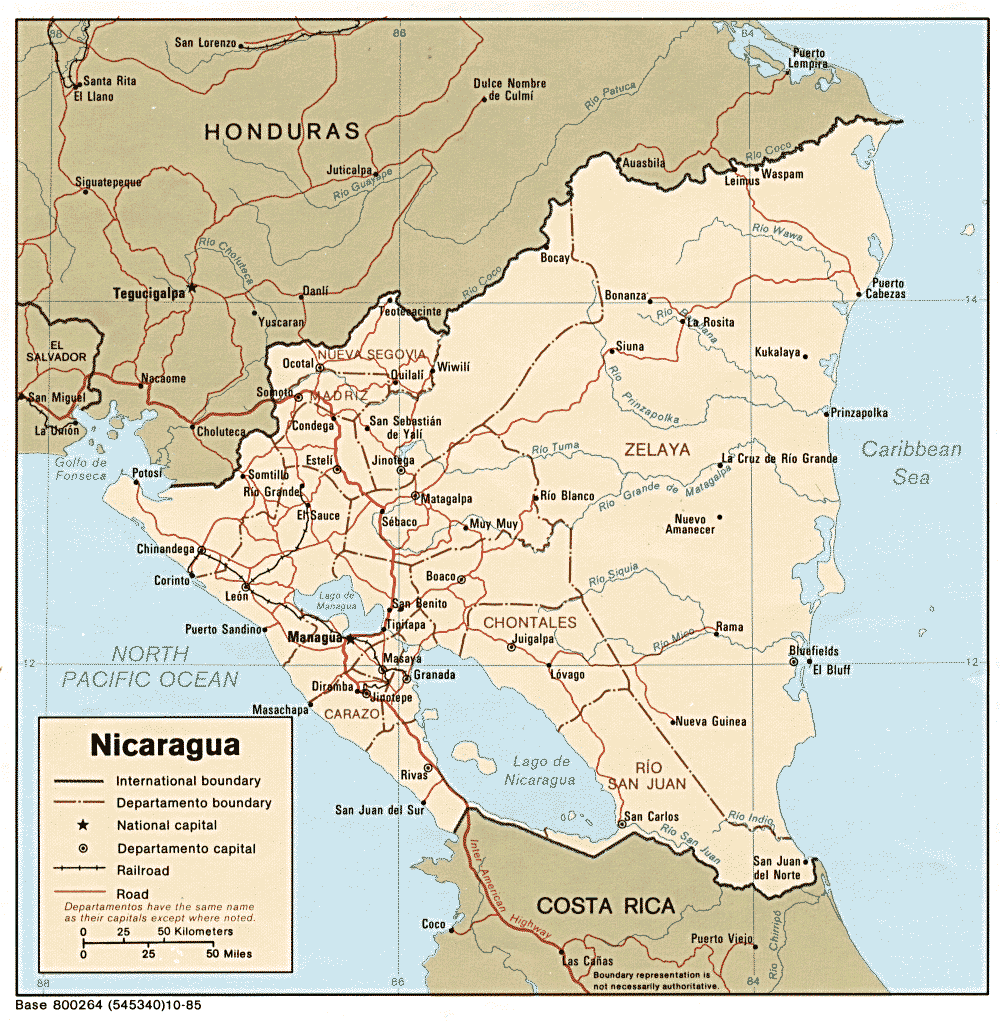
Military commander during the Nicaraguan Civil WarDora Maria proved to be an effective military commander. Upon her arrival to Panama with the released Sandinistas in August 1978, she trained in Cuba and Panama. Sometimein February 1979 was back in Nicaragua fighting. Her fame won her an important place in the Tercerista leadership structure. For five consecutive months she lead Sandinista platoons all over the country in skirmishes with the Nicaraguan National Guard. First in the Southern Front with Eden Pastora forces, and later in Central and northern Nicaragua. According to Sandinista Commander Monica Baltodano, her raids on the northern provinces in conjunction with Cmdr Leticia Herrera fighters often surprised the enemy and succeeded in dispersing their forces in favor of the newly devised urban insurrectional war strategy.
Finally, she lead the Sandinista units fighting the enemy's elite forces block by block for six conscutive weeks until capturing the city of Leon in June 1979, the first major city to fall to the Sandinistas in the Revolution, followed by Managua falling two weeks later. This feat paved the way to the Sandinista Provisional Government Junta installment on this city soonafter.
Public service in the Sandinista GovernmentShe later served as Minister of Health in the first Sandinista administration, initiating a public health campaign that won Nicaragua the UN Educational, Scientific, and Cultural Organization's prize for exceptional health progress.
Academic Life as a HistorianShe wrote a definitive book on Nicaraguan history that underscores the importance of the north-central region of the country to the nation's political and economic history. In 2004 she was appointed Robert F. Kennedy visiting professor in Latin American studies at the Harvard Divinity School, but was barred from obtaining an entry visa to the US on grounds that she was a terrorist.
[1][2] This prompted 122 members of the academic community from Harvard and 15 other North American universities to publish a statement in her defense, noting
“ The accusation made by the State Department against Dora María Téllez... amounts to political persecution of those who have engaged in overthrowing the atrocious dictatorship of Anastasio Somoza in Nicaragua...This regime was almost universally viewed as criminal and inhumane, and yet it was financially and militarily supported by the United States...In reference to dictatorships, just as the State Department cannot affirm that the activities of Nelson Mandela against the atrocious dictatorship of apartheid in South Africa were terrorist activities, neither can it affirm that Dora María’s activities against the atrocious Somoza dictatorship were terrorist.[3]
Political careerIn 1995 she founded the Sandinista Renovation Movement (MRS) after leaving the FSLN. Other prominent Sandinistas like Ernesto Cardenal and Sergio Ramirez are now dissidents and have joined the MRS political party. The party's 2006 presidential elections candidate, Henry Lewites died of natural causes before the elections.
On June 4, 2008, Tellez began a hunger strike to protest the "dictatorship of Daniel Ortega", her former comrade-in-arms who was elected again to the presidency in November, 2006. Ortega and his supporters stripped the MRS of its legal status about one week later. Tellez suspended her hunger strike on June 16, after doctors told her she would suffer irreparable damage if she continued her fast. She vowed to begin "a new stage of struggle" against what she termed the dictatorial policies of Daniel Ortega.
References^ Campbell, Duncan, US bars Nicaragua heroine as 'terrorist', retrieved on 2007-02-16
^ Jusino, William L., Would-Be Prof Denied Entry Visa, retrieved on 2007-02-16
^ Rogers, Tim ([dead link] – Scholar search), Schooled in Revolution, retrieved on 2007-02-16